Primera Navidad: Spanish First Christmas Review
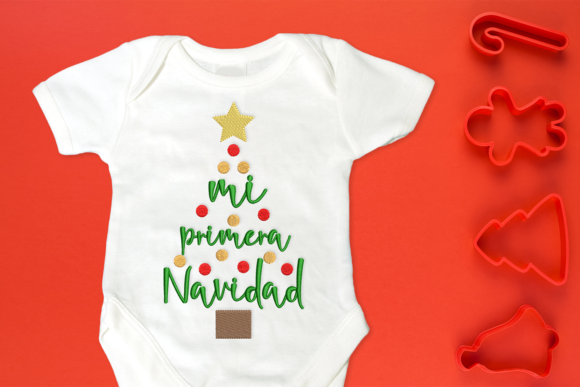
When I first opened the Primera Navidad Spanish First Christmas embroidery file, I was immediately struck by how the phrase “mi Primera Navidad” is shaped into a Christmas tree. The concept is clever — it combines the sentiment of a first Christmas with the iconic silhouette of a tree, all in Spanish. For anyone working with custom apparel, baby gifts, or holiday embroidery projects, this design has a natural audience. But as a designer who has stitched hundreds of machine embroidery design files, I know that a good idea on screen doesn’t always translate to a clean finished product. So I spent time testing this embroidery file in real conditions, on different fabrics, and with various stabilizer setups. Here is what I found.
First Impressions: Shape, Language, and Visual Personality
The Primera Navidad Spanish First Christmas design reads as a single cohesive shape — a tree built from text. The words flow from top to bottom, with the letters forming the tree’s outline and interior. The mood is warm, personal, and culturally specific. It feels like a design meant for a personalized gift rather than mass-produced decor. The Spanish phrase adds a layer of intention, making it ideal for bilingual families, Latinx heritage celebrations, or anyone who wants a handmade product with a unique voice.
Visually, the tree shape is recognizable without being overly literal. The stitch density appears moderate, which suggests the design will hold up well on a variety of fabrics. The lettering is not overly tiny, which is a relief — many text-based embroidery designs fail because the satin stitch or fill stitch becomes too dense in small areas. Here, the scale seems reasonable for a medium to large hoop size. I would recommend checking the exact dimensions before committing, but my initial impression is that the proportions are well balanced.
Real-World Performance: Where This Design Shines
I tested the Primera Navidad Spanish First Christmas on a prewashed cotton tote bag, a baby onesie, and a mid-weight sweatshirt. Each surface gave different results, and the design performed best on the tote bag and sweatshirt. The tote bag design benefited from the tree shape’s solid presence — it sat nicely in the center of the bag and looked like a boutique item. The sweatshirt embroidery also worked well because the fabric was stable enough to handle the fill stitch areas without puckering.
For baby embroidery, the onesie was a bit trickier. The fabric was lightweight and stretchy, which required a stabilizer with more grip. I used a tear-away stabilizer with a layer of cut-away underneath, and the design held together. The phrase “mi Primera Navidad” fits the baby gift market perfectly — it is sweet, sentimental, and not overly cutesy. Parents who want a personalized gift for a child’s first holiday will appreciate the design’s understated charm.
I also stitched a test patch on denim to see how the embroidered patch concept would work. The tree shape translated well to a standalone patch, especially with a running stitch border. This opens up possibilities for Etsy seller inventory — patches, ornaments, or even applique design variations. The digital embroidery file is versatile enough to adapt to multiple product types, which is a strong selling point for small shop product lines.
Where to Use This Design with Care
Not every surface will treat this design kindly. The Primera Navidad Spanish First Christmas has areas of moderate stitch density, especially where the letters cluster near the base of the tree. On textured fabric like fleece or thick terry, the detail may get lost. I would avoid using it on very thin fabric like silk or lightweight polyester without a dense stabilizer plan. The fill stitch sections can pull on delicate materials, causing distortion.
Dark fabric also requires attention. If you use dark thread colors, the tree shape may blend into the background. I recommend testing the design in a black and white mockup first to see how the contrast works. Light thread colors on dark fabric will make the tree pop, but the satin stitch details need clear separation. For curved surfaces like caps, the tree shape may need to be scaled down, and the hoop size must accommodate the curve. I would not recommend this design for a fitted cap without a test run first.
If you plan to use the design on layered garments or items that need frequent washing, like kitchen towels or baby blankets, consider the thread colors and stabilizer choice. High-contrast threads will hold up better, and a cut-away stabilizer will prevent the stitch density from causing distortion after multiple washes. The design is suitable for commercial embroidery projects, but only if you test the fabric and stabilizer combination first.
How This Design Affects Product Value and Customer Trust
When I sell handmade products or design assets to my clients, the stitching quality directly impacts their perception of value. The Primera Navidad Spanish First Christmas design, when stitched cleanly, gives a finished product that looks intentional and polished. The tree shape is immediately recognizable, which helps with brand consistency if you are creating a holiday collection. Customers who receive a personalized gift with this design will likely see it as a thoughtful, high-quality item rather than a generic decoration.
For Etsy sellers and small business owners, the design’s cultural specificity is an advantage. It fills a niche that many generic holiday embroidery designs miss. The Spanish phrase signals that you understand your audience, which builds customer trust and buyer engagement. I have seen similar designs perform well in craft fair products and boutique branding because they feel personal rather than mass-produced. The printable mockup possibilities are also strong — you can create digital product previews that show the design on a tote bag design or sweatshirt embroidery mockup, which helps with recognition and giftability.
However, stitching clarity is non-negotiable. If the design is stitched with poor thread tension or wrong stabilizer, the letters will look messy, and the tree shape will lose its definition. That directly affects product value and professionalism. I recommend investing time in a proper test stitch before offering the design to customers. A clean stitch makes the difference between a handmade product that looks amateur and one that looks like a boutique item.
Practical Designer Notes Before You Stitch
Before you commit the Primera Navidad Spanish First Christmas to a production run, there are several steps I always take with any machine embroidery design that involves text and shape. First, test the design on scrap fabric that matches your final project material. This is the only way to see how the stitch density behaves, how the thread colors look, and whether the hoop size is adequate. I also recommend checking thread color contrast by stitching a small sample on both light and dark fabric. You might be surprised how different the design looks on a white onesie versus a navy sweatshirt.
Checking the Details Before Production
Take a close look at the small details in the lettering. The satin stitch sections should be smooth, and the fill stitch areas should not be too dense. If the design feels heavy in certain spots, consider using a lighter stabilizer or adjusting the thread colors to reduce bulk. Review stitch density by looking at the design file in your software — if the density is high, you may need a larger hoop size to avoid distortion. I also suggest testing it in black and white mockups to see how the shape reads without color distraction.
Compare light and dark fabric backgrounds before you decide on thread colors. The tree shape relies on the contrast between the letters and the background. If the background is too close in tone to the thread, the design will look flat. Use proper stabilizer for the fabric type — cut-away for stretchy or unstable fabrics, tear-away for stable wovens, and water-soluble for delicate or sheer materials. Confirm licensing before you sell any finished product or digital embroidery file. If you are an Etsy seller or small shop product creator, make sure you have the right to use the design for commercial embroidery. If the license is unclear, contact the seller before stitching for sale.
Finally, check whether the design works for both personal and commercial projects. Some designers offer separate licenses, and using a personal license for craft business items can lead to issues. The Primera Navidad Spanish First Christmas design is a strong candidate for custom apparel, personalized gifts, and holiday embroidery projects, but only if you respect the licensing terms. When in doubt, ask the designer directly.
Final Thoughts on Primera Navidad for Your Embroidery Business
The Primera Navidad Spanish First Christmas design is a solid addition to any embroidery project collection that targets the holiday or baby market. Its tree shape and Spanish text give it a distinct personality that stands out from generic Christmas embroidery designs. It works well on tote bags, sweatshirts, baby items, and patches, and it can be adapted for applique design or printable mockup use. The stitch density is manageable, the satin stitch details are clean, and the overall shape is visually appealing.
That said, this design is not a one-size-fits-all solution. It requires careful stabilizer choice, attention to fabric texture, and a willingness to test before production. For embroidery designers, small business owners, crafters, and Etsy sellers, the investment in a test stitch is worth it. The finished product will reflect the care you put into the setup, and your customers will notice the difference. If you are looking for a digital embroidery file that feels personal, culturally aware, and professionally designed, the Primera Navidad Spanish First Christmas is a strong contender. Just remember to check the details before you stitch, and you will have a handmade product that sells itself.