Merry Christmas Sign Embroidery Design Review
As an embroidery designer who has worked with hundreds of small businesses on branded merchandise, I have learned to evaluate a machine embroidery design not just for how it looks on screen, but for how it performs in real production. The Merry Christmas Sign design recently crossed my desk, and I want to share a detailed review focused on its potential for small business merch, custom apparel, and embroidered patch applications. This review is written for shop owners, Etsy sellers, apparel decorators, and anyone building a brand identity around seasonal or holiday offerings.
First Impression: A Friendly, Handmade Statement
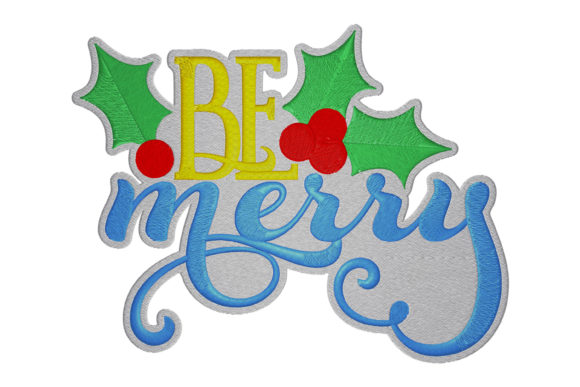
The Merry Christmas Sign immediately reads as a friendly, rustic, and handmade-style design. It does not feel overly polished or corporate, which is a strong advantage for small businesses that want to communicate warmth, tradition, and personal care. The title suggests a sign-like layout, which typically means a horizontal or slightly rectangular composition that works well on chest areas, aprons, and tote bags. This design feels like it belongs on a bakery apron, a florist shop tee, or a café staff uniform. It is not flashy or modern, but it carries a classic, welcoming energy that customers associate with handmade quality and seasonal cheer.
For a small business, first impressions matter. The Merry Christmas Sign gives off a comforting, almost nostalgic vibe that can help a brand feel approachable and memorable. It does not scream for attention, but it invites a closer look, which is exactly what you want on a branded patch or a piece of customer merchandise.
Real Business Use Cases for Merry Christmas Sign
I have evaluated this design across several common small business applications, and I see strong potential in the following areas:
- Staff uniforms and aprons – A café, bakery, or coffee shop can use the Merry Christmas Sign as a chest logo accent on aprons or work shirts. The design’s friendly character fits well with food service and hospitality settings where customers expect a warm welcome.
- Embroidered patches for merchandise – This design translates well to an embroidered patch that can be sewn onto caps, tote bags, or jackets. Patches are a low-risk way to test a design before committing to full garment decoration, and they allow customers to choose where to display the brand.
- Cap embroidery – The Merry Christmas Sign can work on the front of a cap if the design is sized appropriately. Caps require careful attention to stitch density and hoop size, but a well-executed cap design becomes a walking billboard for your brand.
- Tote bag design – Tote bags are a staple of small business merch, and this design’s horizontal layout fits naturally on a bag face. It adds a handmade, gift-like feel that customers appreciate.
- Branded product labels – For handmade product sellers, an embroidered label on the inside of a garment or on a product packaging accent can elevate the unboxing experience. The Merry Christmas Sign can serve as a subtle brand mark.
- Event and seasonal merchandise – Holiday markets, pop-up shops, and seasonal events are perfect opportunities to offer limited-edition items featuring this design. It creates a sense of occasion and encourages impulse purchases.
Where to Use This Design with Care
Not every application is ideal for the Merry Christmas Sign. Based on my experience with similar machine embroidery design files, here are some areas where you should proceed with caution:
- Small patch sizes – If you plan to produce a patch smaller than two inches, test the design carefully. Detailed lettering or sign-like elements may lose clarity at tiny sizes. Always stitch a sample before committing to bulk production.
- Cap fronts – Caps have curved surfaces and limited space. The Merry Christmas Sign may need to be simplified or resized to fit a cap front without distortion. Use a curved hoop and proper stabilizer to maintain stitch quality.
- Curved or textured fabric – Fabrics like fleece, bulky knits, or heavily textured surfaces can cause design elements to shift or distort. Test on your actual garment material before production.
- Tiny lettering – If the design includes fine text, be aware that small letters can become unreadable after washing or on uneven fabric. Increase letter size or simplify the text if needed.
- High stitch density – Dense stitching can cause puckering on lightweight fabrics or make the design stiff and uncomfortable. Check the stitch count and adjust density if necessary.
- Dark uniforms – On dark fabrics, thread color contrast becomes critical. A design that looks cheerful on white may disappear on navy or black. Always test thread colors against the actual fabric.
- Frequent washing – Items that are washed often, such as aprons or staff shirts, need a design that can withstand repeated laundering. Use quality stabilizer and trim jumps carefully to avoid fraying.
How Merry Christmas Sign Affects Brand Identity
The Merry Christmas Sign has a direct impact on how customers perceive your business. A well-executed embroidered design signals professionalism, attention to detail, and a commitment to quality. When customers see a consistent, attractive design on staff uniforms, merchandise, or packaging, they feel more confident in the brand. This design, with its handmade and friendly character, can help a small business stand out in a crowded market. It tells customers that you care about presentation and that your products are made with care.
On the flip side, a poorly stitched or poorly placed design can damage trust. If the Merry Christmas Sign is crooked, puckered, or fading after a few washes, customers may question the overall quality of your business. That is why I always recommend testing every embroidery file on real fabric, creating a printable mockup for client approval, and using proper stabilizer and hoop size for each application.
Practical Embroidery Designer Notes for Production
Before you run the Merry Christmas Sign through production, here are some practical steps I recommend based on years of working with digital embroidery file formats:
- Test in black and white first – Before committing to full thread colors, stitch a sample in black and white to check the design’s clarity, spacing, and structural integrity. This helps you spot issues with jump stitches, underlay, or density.
- Check if it works at small patch size – If you plan to produce patches, test the design at the intended patch size. Make sure every element remains readable and that the design does not become too dense or too sparse.
- Review thread color contrast – Choose thread colors that contrast well with your fabric. A design that looks good on a light background may be invisible on a dark one. Use a color wheel or your software’s simulation tool to check contrast.
- Inspect spacing and alignment – Look at the spacing between letters, elements, and the outer edge of the design. Tight spacing can cause thread breaks or distortion. Loose spacing may look unfinished.
- Confirm hoop size – Make sure the design fits within your hoop size with room to spare. A design that barely fits may cause registration issues or fabric distortion.
- Test on real fabric – There is no substitute for stitching on your actual garment fabric. Different fabrics behave differently under the needle, and a design that works on cotton may fail on polyester or fleece.
- Use proper stabilizer – The right stabilizer is essential for a clean, durable stitch. For patches, use a tear-away or cut-away stabilizer depending on the fabric. For caps, use a stiff stabilizer to prevent distortion.
- Create a mockup for client approval – Before stitching a full run, create a printable mockup or digital preview so your client can see how the Merry Christmas Sign will look on the finished product. This saves time and prevents misunderstandings.
- Compare it beside other design assets – If you have other design assets in your brand library, compare the Merry Christmas Sign to ensure visual consistency. The design should feel like part of a cohesive family, not a one-off.
- Confirm commercial licensing – The product description mentions that this machine embroidery design comes with multiple file formats. But before you use it for commercial embroidery on merchandise you sell, confirm that the license allows commercial use. Some designs are for personal use only.
Final Thoughts on Merry Christmas Sign for Business
The Merry Christmas Sign is a solid choice for small businesses looking to add a seasonal touch to their brand identity and small business merch. Its friendly, handmade personality fits well in cafes, bakeries, florists, boutiques, and other customer-facing shops. It works as a chest accent, a patch, a cap design, or a tote bag mark, and it can help build customer trust and recognition when executed well.
However, like any machine embroidery design, its success depends on careful testing, proper materials, and attention to detail. Do not skip the test stitch. Do not assume it will work on every fabric. And always check the specifics of the embroidery file—stitch count, size, and format—before you begin production. With the right preparation, the Merry Christmas Sign can become a valuable asset in your seasonal merchandise lineup and a meaningful addition to your design assets for years to come.